BAIN MUSC 525
Post-Tonal
Theory
Mathematical
Terms &
Concepts
Return
to: MUSC 525
Post-tonal
theory (Straus 2016)
invokes a variety of basic mathematical concepts,
especially concepts from discrete mathematics (e.g.,
number theory, set theory, combinatorics, and graph theory).
Concepts from algebra, abstract algebra (especially group theory)
and geometry have also played a significant role in its
development. Moreover, the emerging field of mathematical
music theory is constantly expanding the repertoire of
mathematical approaches used to understand musical objects, entities,
operations, relations, and spaces; e.g., see the Journal
of Mathematics
and Music,
MuseMat,
and proceedings of the Society for Mathematics and Computation in Music.
For a historical overview of the development of pitch-class
set theory, I recommend reading Babbitt 2003
and Schuijer 2008. To learn more
about mathematics and the
twelve-tone system, I recommend reading Morris 2007.
Below you will find links to definitions of the mathematical
concepts we will encounter this semester. Wolfram's
MathWorld {MW}
provides
authoritative definitions of mathematical terms. Wikipedia
{WP} provides highly
visual starting points for additional learning and discovery.
Links to Wolfram Alpha
(and other Web-based apps) are provided so you can interactively
perform certain calculations. Google
Calculator can perform the most common
calculations (e.g., a mod n, n
factorial, n choose k,
etc.). For a graphing
calculator with audio playback capability, see Desmos.
Keywords:
Geometrical music theory (Hall
2008), Mathematical
music theory (Mazzola et al. 2016 & Jedrejewski
2006), Neo-Riemannian
theory (Cohn 2012), Pitch-class
set theory (Babbitt 2003,
Forte 1973, Rahn 1980 & Morris 1987), Scale
theory (Tymoczko 2011), Transformational theory (Lewin 1987),
Twelve-tone theory (Morris 2007)
- Number
Theory {MW}

- Integers
{MW}
- Z =
{..., –3, –2, –1, 0, 1, 2, 3, …}
- Z+
= {1, 2, 3, ...}
- Modular
arithmetic, or "clock arithmetic" {MW;
WP}
- Computational
Discrete Mathematics
 Set Theory
{MW}
Set Theory
{MW}
- Naive
set theory {WP}
vs. axiomatic set theory {WP}
- Set {MW; WP}
- Finite
sets {MW} vs.
infinite sets {MW}
- Set
notation {WP}
- Cardinality
{MW}
- Universal
set {MW}
- Ex.
Integers mod 12: {0, 1, 2, 3, 4, 5, 6, 7, 8, 9, 10,
11}
- Empty
set {MW}
- Singleton
set {MW}
- Set
Operations and Relations
- Union
{MW}
- Intersection
{MW}
- Complement
{MW}
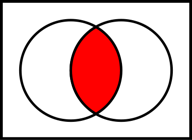
- Venn
Diagrams
 Subsets
{MW;
WP}
Subsets
{MW;
WP}
- Inclusion
- Proper
subset {MW}
- Superset {MW}
- Power
set {MW}
Ex.: P {1, 2, 3} =
{{}, {1}, {2}, {3}, {1, 2}, {1, 3}, {2, 3}, {1, 2, 3}}
Compute power sets using Wolfram
Alpha
- Hasse
Diagram {MW
| WDP}
- Set
partition {MW}
- Other
operations
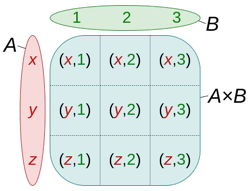
- Cartesian
product {MW
| WP}
 Combinatorics
{MW
| WP}
Combinatorics
{MW
| WP}
- Does order matter? Is repetition
allowed?
- Set
{MW}
- Permutation,
or arrangement {MW | WP}
- Multiset
{MW}
- Sequence
{MW}
- Counting
sets
- Combination
{MW}
- Binomial
coefficient {MW}
- n choose k {MW}
Compute n
choose k using Google's built in
calculator or Wolfram
Alpha
- Pascal's
Triangle {MW
| WP}
- Permutations
Compute permutations using Wolfram
Alpha
- Permutation
{MW}
- Factorial
{MW}
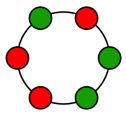 Necklace {MW
| WP}
Necklace {MW
| WP}
- Combinatorial
necklaces and bracelets (Davis
2012)
Compute necklaces and bracelets with
Davis 2012
- Partition
{MW}
Compute integer partitions using Wolfram
Alpha
- Advanced: (Hook 2007)
- Enumeration
{MW
| WP}
- Pólya
enumeration theorem {MW
| WP}
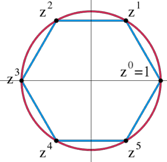 Graph Theory
- Graph {MW}
- Nodes
(or vertices) {MW}
- Edges {MW}
- Directed
{MW}
vs. undirected {MW}
graphs
- Arrows
(directed graph edge)
- Isographic
networks
- Algebra
{MW}
- Equivalence
relation {MW}
- Reflexive
- Symmetric
- Transitive
- Equivalence
class {MW}
- Binary
operation {MW}
- Binary
operator {MW}
- Function
{MW}
- Function
composition {MW}
- Involution
{WP}
- Isomorphism
{WP}
- Abstract
Algebra {MW;
See Socratica, Abstract
Algebra)
- Group
Theory (See also: Lewin
1987)
- Group
{MW;
WP}
- Cyclic
group {MW
| WP}
- Ex.
Integers mod 12 under addition (Z12)
- Dihedral
group {MW
| WP}
(Crans et al. 2009)
- Symmetric
group {MW
| WP}
- Ring {MW}
 Geometry {MW} (Tymoczko 2011; Toussaint 2019)
- Euclidean
Plane {MW}
- Circle
{MW}
- Polygon
{MW}
- Symmetry
{WP}
- Topology
{MW} (Andreatta,
Amiot & Yust 2020)
- Space {MW; WP} (See also: Lerdahl 2004; Tymoczko 2011; Hook 2022)
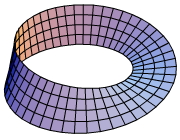
- Möbius
strip {MW;
WP}
- Torus {MW; WP}
- Quotient
space {WP}
- Orbifold
{WP}
- Other
- Category
theory {WP}
(Mazzola 2002)
- Fourier
transform {WP;
3Blue1Brown: YouTube}
(Yust 2016)
- Knot
theory {WP} (Jedrejewski 2006)
Click
on an image to see the image credit.
Research
IRCAM, Séminaire
MaMux – http://repmus.ircam.fr/mamux/home
Journal
of Mathematics and Music (JM&M) {Taylor
& Francis}
This journal features emerging research
in mathematical and computational approaches to music theory,
analysis, composition and performance. USC maintains an electronic
subscription to this journal.
MusMat –
Brazilian Journal of Music and Mathematics (MusMat) – https://musmat.org/journal/presentation.html
Society for
Mathematics and Computation in Music (SMCM) – https://www.smcm-net.info
Geometrical
Music Theory
The following introductory articles
appeared in the journal Science between 2006 and 2008:
Rachel Wells Hall, Geometrical
Music Theory {JSTOR;
Science} (Hall 2008)
Dmitri Tymoczko, The Geometry
of Musical Chords {JSTOR;
Author's
Website} (Tymoczko
2006)
Julian Hook, Exploring Musical
Spaces {JSTOR}
(Hook 2006; See also: Hook 2022)
Clifton Callender, Ian Quinn,
and Dmitri Tymoczko, Generalized Voice-Leading Spaces {JSTOR} (Callender et al. 2008)
See also: BAIN MUSC 726G
Geometrical Music Theory
Links
Fiore, Music
and Mathematics (2009), REU
Lectures {Author's
website}
Shilito, Introduction to Higher Mathematics (2013-20),
video series {YouTube
Playlist}
Socratica, Abstract
Algebra, video series {Website;
YouTube
Playlist}
Wikipedia,
Available online at: <https://www.wikipedia.org>
Wolfram, Alpha.
Available online at: <https://www.wolframalpha.com>
Wolfram, MathWorld
(MW). Available online at: <https://mathworld.wolfram.com>.
References
For a more comprehensive music & mathematics
bibliography, see BAIN MUSC 726G
Andreatta,
M., Amiot, E., & Yust, J. 2020. "Geometry and
Topology in Music: Introduction." Journal of
Mathematics and Music 14/2: 107–113. {JM&M}
Babbitt, Milton. 2003. The
Collected Essays of Milton Babbitt, edited by
Stephen Peles, with
Stephen Dembski, Andrew Mead and
Joseph N. Straus.
Princeton: Princeton University Press. {Full
text: JSTOR}
Callender, Clifton,
Ian Quinn, and Dmitri Tymoczko. 2008. "Generalized Voice-Leading Spaces."
Science
320/5874 (April 18, 2008): 346–348. {JSTOR}
Cohn, Richard. 2012. Audacious Euphony: Chromatic Harmony
and the Triad's Second Nature. New York: Oxford
University Press. {GB}
Crans, A.; Fiore,
T.; and Satyendra, R. 2009. "Musical Actions of Dihedral
Groups." The American Mathematical Monthly, 116/6
(2009): 479–495. {MMA.org}
Forte, Allen. 1973. The Structure of Atonal Music.
New Haven: Yale University Press. {Full text: JSTOR}
Hall, Rachel Wells. 2008. "Geometrical Music Theory." Science
320/5874 (April 18, 2008): 328–329. {JSTOR;
Science}
Hook, Julian.
2022. Exploring Musical Spaces: A Synthesis of
Mathematical Approaches. New York: Oxford. {GB}
__________. 2007. "Why Are There Twenty-Nine Tetrachords?
A Tutorial on Combinatorics and Enumeration in Music Theory? Music
Theory Online 13/4 (December 2007). {MTO}
Jedrejewski, Frank. 2006. Mathematical Theory of Music.
Paris: Ircam-Centre Pompidou. {Delatour}
Johnson,
Timothy A. 2008. Foundations of Diatonic Theory: A
Mathematically Based Approach to Music Fundamentals.
New York: Scarecrow Press. {GB}
Lerdahl,
Fred. 2004. Tonal Pitch Space. New York: Oxford
University Press. {GB}
Lewin,
David. 1987. Generalized Musical Intervals and
Transformations (GMIT). New Haven: Yale University
Press. {GB}
Mazzola,
Guerino. 2002. The Topos of Music:
Geometric Logic of Concepts, Theory, and Performance,
Volume 1. Basel:
Birkhäuser Verlag. {GB}
Mazzola, Guerino, Maria Mannone, and Yan Pang.
2016. Cool Math for Hot Music: A First Introduction to
Mathematics for Music Theorists. New York: Spring. {GB}
Morris, Robert. 2007. "Mathematics and the Twelve-Tone
System: Past, Present, and Future." Perspectives of
New Music 45/2
(Summer, 2007), pp. 76-107. {JSTOR}
____________. 1991a. Class Notes for Atonal Theory.
Lebanon, NH: Frog Peak. {GB}
____________.
1991b. Class Notes for Advanced Atonal Theory.
Lebanon, NH: Frog Peak. {GB}
____________.
1987.
Composition with Pitch Classes: A Theory of
Compositional Design. New Haven: Yale University Press.
{GB; JSTOR}
Rahn, John. 1980.
Basic Atonal Theory. New York: Schirmer. {GB}
Schuijer, Michiel. 2008. Analyzing Atonal Music:
Pitch-Class Set Theory and Its Contexts. Rochester:
University of Rochester Press. { GB;
Full text: TCL}
Straus,
Joseph N. 2016. Introduction to Post-Tonal Theory,
4th ed. New York: Norton. {GB}
Tymoczko,
Dmitri. 2011. A Geometry of Music: Harmony and Counterpoint
in the Extended Common Practice. New York: Oxford. {GB;
Full text: TCL}
__________________. 2006. "The Geometry of Musical Chords." Science
313 (2006): 72–74. {JSTOR;
Author's
Website}
Yust, Jason. "Special Collections: Renewing Set Theory." Journal
of Music Theory 60/2 (October 2016): 213–262. {JSTOR}
 Set Theory
{MW}
Set Theory
{MW}

 Combinatorics
{MW
| WP}
Combinatorics
{MW
| WP}

 Graph Theory
 Geometry {MW} (Tymoczko 2011; Toussaint 2019)